Risk Reward Input Workbench
Check the units and denominator behind a planned reward-to-risk ratio. Entry changes, partial quantities and real exits can describe a different account outcome.
Your evidence states are not a provider score, audit opinion or performance finding.
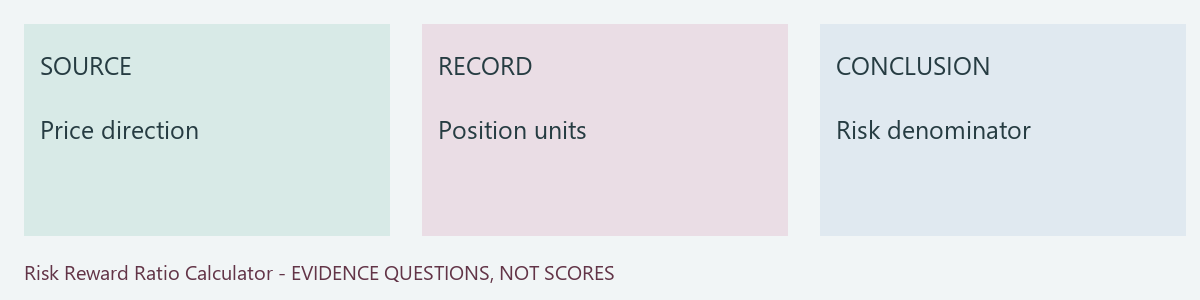
Primary reference documents
References support source definitions and mechanisms, not a completed review, measured return or endorsement. The questions are this publication's editorial record design.
Use the filled reference without filling evidence gaps
The seven-position workbook provides complete invented quantities, costs and original gross risk. It can supply an example of a resolved arithmetic field while actual provider executions, funding contracts and performance cutoffs remain untested. The ten evidence fields continue to ask for different records. A documented input state is not an assurance score. A complete hypothetical quantity record does not mean this publication audited a real account, and a grade or founder credential cannot replace an execution report. Preserve the partial finding rather than forcing all fields into documented status because one example calculates cleanly.
Exports retain the reader record
JSON import restores a matching-publication note set, not a provider verification. Wrong-site, duplicate-ID and malformed input must leave the existing record untouched. CSV treats formula-like text as data. Never include credentials or private account identifiers in these notes. The new calculator exports are separate formula records and cannot be imported as if they were independent evidence for all ten fields. The original filters and reset stay available. This static workbench publishes no user-review population and performs no paid trial, portfolio certification, eligibility determination or official price selection.